‘Tis the Season of Forecasting Folly

By Tim Pierotti
Chief Investment Strategist WealthVest
This week, I saw the first of what will be dozens of 2026 S&P forecasts from Wall Street Investment Banks. Let me save you some time from reading any of these because they will virtually all say the same thing. Here is the quick summary generated by our very low-tech proprietary LLM model, TimAI:
“We see stocks rising 10% in 2026 to our new target of 7600 for the S&P (some will go to 8000 for the headline attention). We see earnings growing by 10-12% and we assume the earnings multiple to remain constant. We see the economy growing by 2-3% and for the US consumer to remain resilient. We do expect some volatility in markets, but we would be buyers on weakness. We expect the economic and inflationary impact of tariffs to fade next year and fiscal support from the “One Big Beautiful Bill” to support business investment. We believe that as inflation settles down, the Fed will cut two to three times. Our favorite sector remains mega-cap tech driven by the transformative and productivity-generating power of AI”
There you go. That’s the gist. Hours of reading saved. If the above triggers some déjà vu, that’s because you read some similar version of the above last year and the year before that. Nothing changes from year to year but the names and numbers.
If you happen to have a friend who has spent a lifetime following the oil industry, ask him or her where they see oil prices a year from now. Ask your friend who has spent a lifetime studying interest rates, where the 10-year will be a year from now. If they are credible, the first thing they will say is that they have no idea. They have a base case but one that is ready to evolve as new data comes along. That’s how most successful professional traders and analysts in markets approach things: opportunistically, waiting for the fat pitch, with intellectual humility and tight stop-losses.
There is a broad misperception that the markets are influenced by active managers who allocate capital based on these types of annual forecasts. Nothing could be further from the truth. First of all, the vast majority of flows into markets are passive and algorithmic, whether simple Index ETFs or other strategies where qualitative analysis like the above plays zero role in decisions. Secondly, the qualitative and active managers that do exist are largely utilizing strategies that overlay momentum and other quantitative inputs with their fundamental work. They do not marry a macro thesis and hang on, hoping it plays out. If they do, they won't be in the seat for very long.
If just two years ago you told me that in the near future, we would see a growing economy and a soaring stock market amid several quarters of a crushing and historic freight market recession, I might have shrugged politely, but I definitely would have thought you were a crank or an idiot. For decades, everyone from traders to economists trusted that when you saw weakness in freight bookings, or even a little drop in diesel demand, you knew that might indicate some emerging economic demand weakness. Measures of freight demand are definitionally leading indicators. Maybe the definition needs to be revised because we now live in a world where the market has seen Leading Economic Indicators (LEI’s) signal a recession several times in recent years (including currently), and the recession never came. The point is that an indicator that had a perfect post-WW2 track record of predicting recessions doesn’t work anymore. The lesson is that our economy and our market structure evolve in ways that few, if anyone can predict.
So what to do then? I don’t do forecasts like annual S&P targets because I know I don’t know the future. I spent five years at one of Wall Street’s top long-short hedge funds and can testify that none of those people did either. None of those alumni of Wharton and Harvard and Goldman Sachs knew where the market would be next year any more than I know who will win the Super Bowl.
Predictions aren’t just hard, but there is a frank self-delusion and maybe even an inherent dishonesty to these types of market predictions, as they confer a false sense of clairvoyance that doesn’t exist. We are fooled by randomness.
That is not to say all Wall Street and Independent research is bad. There are great research analysts out there who study companies and find and recommend the underestimated long-term industry winners, companies with underestimated pricing power, and addressable markets. There are some and only some independent research services and newsletters that offer very high-quality risk management, trading, and portfolio management advice that are based on transparent and probabilistic systems. There are even the Wall Street equity strategists that I malign, who add value by helping clients quantify risks as well as opportunities.
So, as you think about 2026, the number one thing to ask yourself is not what do I think the market is going to do or what does the guy on CNBC think the market will do, but you should consider how much risk do you want to incur? Perhaps the prognosticators will be right, and we will slide up another 10 to 15%, but maybe there is a geopolitical oil shock, an AI optimism downturn, or even just a bit of regular old mean reversion to margins and valuations if demand slows.
Try to hit singles. Get a good night’s sleep. That’s my advice for 2026.
About WealthVest:
WealthVest was founded in 2009 and is one of the leading distributors of fixed, indexed, and registered index-linked annuities to banks and broker-dealers. Financial institutions value WealthVest's insightful thought leadership, product design expertise, marketing strategies, technology, and specialization in field and hybrid-based sales and advisor marketing training.
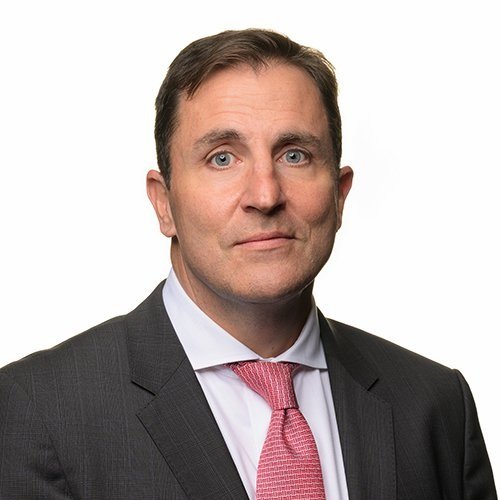
Tim Pierotti is WealthVest’s Chief Investment Strategist.
Tim has over 25 years of experience in various aspects of the equities business. Prior to joining WealthVest, Mr. Pierotti spent seven years in Equity Research management roles at Deutsche Bank and most recently at BMO where he was a Managing Director and Head of US Product Management. Tim has 11 years of investment experience most notably as Head of Consumer Research and Portfolio Manager at The Galleon Group, a former NY based $8Bln Long/Short hedge fund. Tim is a graduate of Boston College and lives in Summit NJ.
WealthVest makes no representation or warranty, expressed or implied, with respect to the accuracy, reasonableness, or completeness of any of the statements made in this material, including, but not limited to, statements obtained from third parties. Opinions, estimates and projections constitute the current judgment of Tim as of the date indicated. They do not necessarily reflect the views and opinions of WealthVest and are subject to change at any time without notice. WealthVest does not have any responsibility to update this material to account for such changes. There can be no assurance that any trends discussed during this material will continue.
Statements made in this material are not intended to provide, and should not be relied upon for, accounting, legal or tax advice and do not constitute an investment recommendation or investment advice. Investors should make an independent investigation of the information discussed in this material, including consulting their tax, legal, accounting or other advisors about such information. WealthVest does not act for you and is not responsible for providing you with the protections afforded to its clients. This material does not constitute an offer to sell, or the solicitation of an offer to buy, any security, product or service, including interest in any investment product or fund or account managed or advised by WealthVest.
Certain statements made in this material may be “forward-looking” in nature. Due to various risks and uncertainties, actual events or results may differ materially from those reflected or contemplated in such forward-looking information. As such, undue reliance should not be placed on such statements. Forward-looking statements may be identified by the use of terminology including, but not limited to, “may”, “will”, “should”, “expect”, “anticipate”, “target”, “project”, “estimate”, “intend”, “continue” or “believe” or the negatives thereof or other variations thereon or comparable terminology.
The S&P 500® is a trademark of Standard & Poor’s Financial Services, LLC and its affiliates and for certain fixed index annuity contracts is licensed for use by the insurance company producer, and the related products are not sponsored, endorsed, sold or promoted by S&P Dow Jones Indices LLC or their affiliates, none of which make any representation regarding the advisability of purchasing such a product. WealthVest is not affiliated with, nor does it have a direct business relationship with Standard & Poors Financial Services, LLC.