Nothing but Bad Options for the Fed
Over the weekend, Renaissance Macro’s outstanding market economist Neil Dutta made a compelling argument that there is mounting evidence that a potential inflection in unemployment may be upon us. The US Economy’s 7-Deadly Sins Neil has been among the most outspoken dovish economists in recent months even saying that if the Fed doesn’t cut in December, it would be a “borderline scandal”. Just to be clear, Neil is not someone who always sees the sky falling. He is someone who remained quite constructive on the economy throughout 2023 when so many others were bearish. His track record is so good because he tends to be the guy who says, relax, the economy is fine. I don’t disagree with much of what he wrote about regarding the risk of a weaker job market, but I would note that he doesn’t discuss the fact that the Fed has a dual mandate and it is on the inflation side where they have abjectly failed. That is the crux of the problem the Fed faces. Both sides of the dual-mandate are going in the wrong direction and they have to make a decision that will worsen their position. The only question is to what degree. Simplify’s Michael Green recently referred to the Fed as being in “Zugzwang”, a situation where any move, in any direction, begets more unfavorable options.
Mr. Dutta’s case for the Fed getting more aggressive is that the slow gradual rise in unemployment to levels that remain tight by historical standards risks becoming ‘nonlinear”. In other words, history tells us clearly that what looks like gradual jobs weakness at first can rapidly become a deluge of layoffs. He looks at the housing market and makes the intuitive observation that you can’t have housing permits rolling over with new inventory making new highs and yet construction jobs at highs. Other sectors like restaurants, state and local governments, freight and transportation are all sectors that he sees as likely to be shedding jobs at an increasing rate over the near-term. Lastly, Mr. Dutta points to the NY Fed’s consumer survey which tells us that people feel less confident that they could find a job were they to be let go than at any point in the last ten years.
While I agree with these observations broadly. One issue I do have with the bearish labor view is that we are in an unprecedented time in terms of the scarcity of labor. Economists now put the amount of new jobs needed to keep the unemployment rate flat at somewhere between 0 and 50,000, as opposed to the long-held belief that we needed to create roughly 150,000 jobs every month. The labor market simply isn’t growing. More people my age (over fifty) are leaving the job market and not enough young people, with skills, are looking to replace them. Obviously, immigration at roughly zero is also contributing to the labor scarcity issue. According to the National Federation of Independent Businesses (NFIB), the biggest concern business leaders say they have every month is the ability to fill open roles with qualified people. So, hiring may be weak, but that may in part be driven by a scarcity of qualified candidates. The second area where I may be more sanguine than Mr. Dutta on the labor market is that corporate profits aren’t exactly rolling over. Profit growth has been accelerating lately according to small businesses as well as in larger public companies. It is hard to see an inflection in layoffs at a time where overall profit growth is going in the right direction.
But even if we accept the arguments of the bearish labor market observers, is it fair to say that therefore the Fed should absolutely be cutting? I don’t think it is. We are soon to be entering the fifth year of Fed running above or well above the Fed’s 2% target. While risk assets love a Fed that allows the economy to run hot and is ready to cut at the earliest signs of market weakness, the average American suffers amid high inflation. High long-run inflation means a higher cost of living for those who don’t have the buffer of assets and savings that also inflate.
My guess is the economic data between now and the December meeting will look soft enough the Fed will again cut rates. They will say that they have confidence that inflation will fall to their target in the year after next, just like they said last year. They will say that tariff driven inflation is inherently transitory and should be ignored despite the fact that we remain in the early days of higher cost of goods impacting consumer prices. My guess is that until there is real pressure on the long-end of the yield curve, until the fabled “bond-vigilantes” appear, the Fed will continue to be responsive to financial markets and one side of their mandate while ignoring a cost-of-living crisis for working Americans.

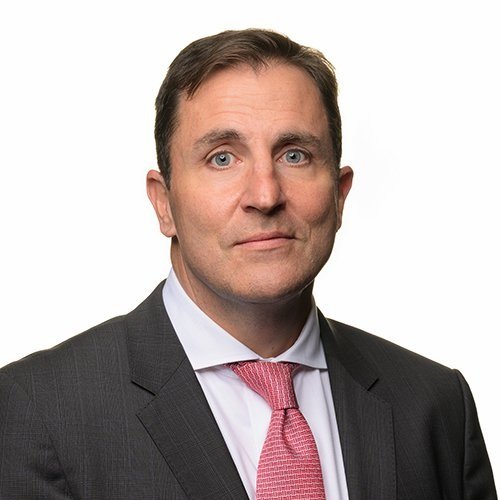
Tim Pierotti is WealthVest’s Chief Investment Strategist.
Tim has over 25 years of experience in various aspects of the equities business. Prior to joining WealthVest, Mr. Pierotti spent seven years in Equity Research management roles at Deutsche Bank and most recently at BMO where he was a Managing Director and Head of US Product Management. Tim has 11 years of investment experience most notably as Head of Consumer Research and Portfolio Manager at The Galleon Group, a former NY based $8Bln Long/Short hedge fund. Tim is a graduate of Boston College and lives in Summit NJ.
WealthVest makes no representation or warranty, expressed or implied, with respect to the accuracy, reasonableness, or completeness of any of the statements made in this material, including, but not limited to, statements obtained from third parties. Opinions, estimates and projections constitute the current judgment of Tim as of the date indicated. They do not necessarily reflect the views and opinions of WealthVest and are subject to change at any time without notice. WealthVest does not have any responsibility to update this material to account for such changes. There can be no assurance that any trends discussed during this material will continue.
Statements made in this material are not intended to provide, and should not be relied upon for, accounting, legal or tax advice and do not constitute an investment recommendation or investment advice. Investors should make an independent investigation of the information discussed in this material, including consulting their tax, legal, accounting or other advisors about such information. WealthVest does not act for you and is not responsible for providing you with the protections afforded to its clients. This material does not constitute an offer to sell, or the solicitation of an offer to buy, any security, product or service, including interest in any investment product or fund or account managed or advised by WealthVest.
Certain statements made in this material may be “forward-looking” in nature. Due to various risks and uncertainties, actual events or results may differ materially from those reflected or contemplated in such forward-looking information. As such, undue reliance should not be placed on such statements. Forward-looking statements may be identified by the use of terminology including, but not limited to, “may”, “will”, “should”, “expect”, “anticipate”, “target”, “project”, “estimate”, “intend”, “continue” or “believe” or the negatives thereof or other variations thereon or comparable terminology.
The S&P 500® is a trademark of Standard & Poor’s Financial Services, LLC and its affiliates and for certain fixed index annuity contracts is licensed for use by the insurance company producer, and the related products are not sponsored, endorsed, sold or promoted by S&P Dow Jones Indices LLC or their affiliates, none of which make any representation regarding the advisability of purchasing such a product. WealthVest is not affiliated with, nor does it have a direct business relationship with Standard & Poors Financial Services, LLC.